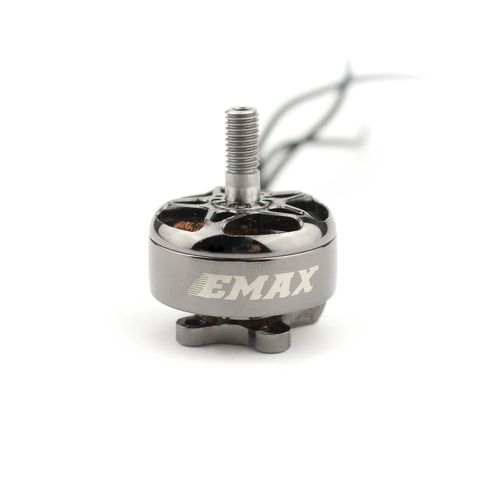

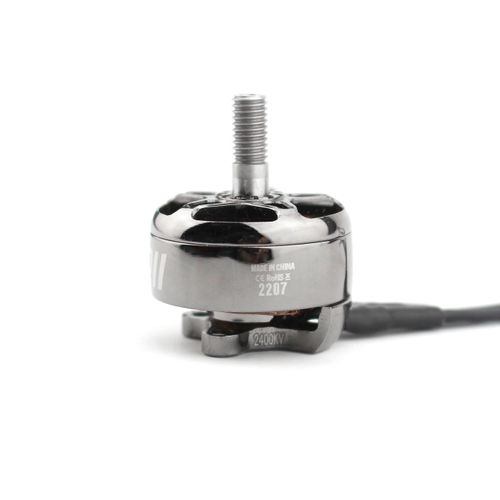
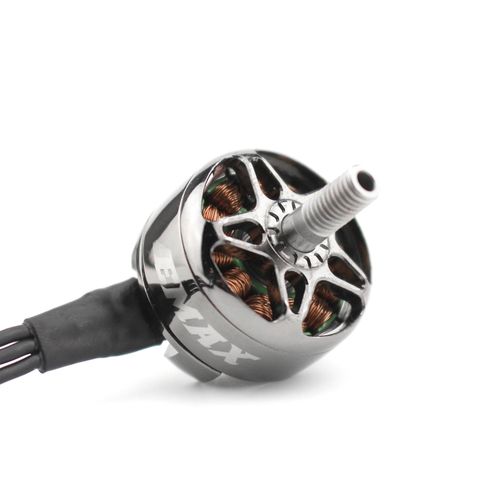
EMAX ECO II 2306 Brushless Motor
Technical Highlights
2306 FPV Propulsion Platform
The 23 × 6mm stator configuration provides a balanced combination of torque, throttle response and rotational speed for 5-inch and selected 5.5-inch FPV racing, freestyle and cinematic drone builds.
Three KV Options
The ECO II 2306 series is available in 1700KV, 1900KV and 2400KV versions. This allows builders to match motor speed and battery voltage to efficient freestyle, high-output racing or responsive 4S configurations.
N52SH Arc Magnet System
N52SH arc magnets provide strong magnetic performance for responsive throttle control, increased torque and reliable high-RPM operation under demanding FPV flight conditions.
Reinforced Rounded Bell
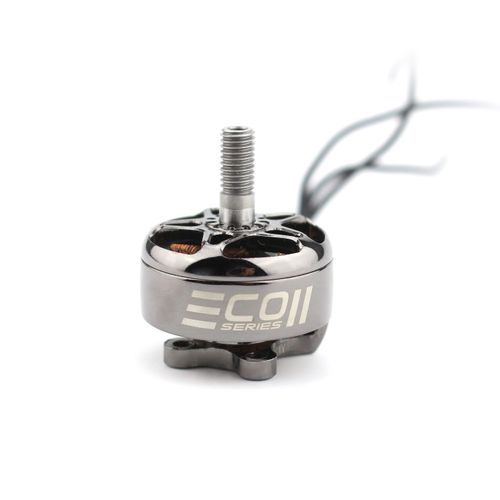
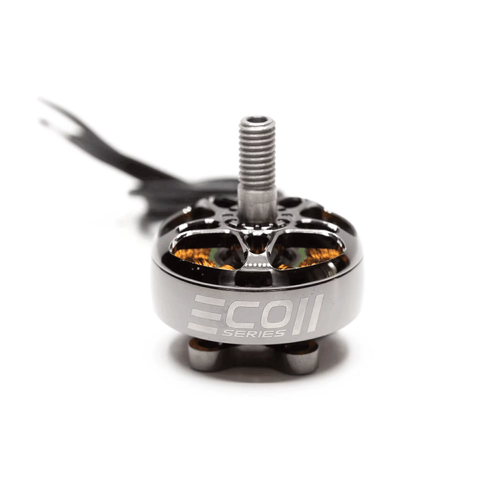
The redesigned rounded motor bell uses reinforced attachment areas and a mirror-polished finish, combining improved structural durability with the distinctive ECO II appearance.
EZO 9mm Precision Bearing
The EZO 9mm bearing system supports smooth, low-friction rotation and consistent operation, helping reduce mechanical resistance and maintain predictable motor performance.
12N14P Multi-Strand Winding
A 12N14P motor configuration and multi-strand winding design provide the electrical response required for modern multirotor propulsion systems while supporting commonly used FPV ESC protocols.
KV Selection Guidance
1700KV Version
The 1700KV version supports 3–6S LiPo power systems and is suited to efficient 6S freestyle, racing and cinematic builds. Official test data lists a 36A peak current and 910W maximum power on 6S under the specified test conditions.
1900KV Version
The 1900KV version supports 3–6S LiPo batteries and provides a more aggressive RPM profile for responsive 6S racing and freestyle configurations. Official test data lists a 46A peak current and 1160W maximum power on 6S.
2400KV Version
The 2400KV version is designed for 3–4S LiPo power systems and delivers the higher motor speed commonly required by responsive 4S FPV builds. Official test data lists a 44A peak current and 740W maximum power on 4S.
Build Compatibility
Designed for commonly used 5-inch and 5.5-inch FPV propellers.
Compatible with 16 × 16mm motor mounting patterns using four M3 screws.
Uses an M5 threaded propeller shaft with an aluminum nyloc nut.
Includes a 4mm internal bearing shaft and EZO 9mm precision bearing.
Supplied with 120mm 20 AWG silicone motor wires.
Suitable for FPV racing, freestyle, cinematic and custom multirotor builds.
Installation Notes
Select the KV version according to the intended battery voltage, propeller load and required flight characteristics.
Use an ESC with sufficient continuous-current and burst-current capacity for the selected motor, battery and propeller combination.
Verify that mounting screws do not extend into or contact the motor windings.
Check motor direction and remove the propeller before configuring or testing the ESC and flight controller.
Monitor motor and ESC temperature after changing the propeller, battery voltage or flight-controller filtering and tuning.
Published current, power and thrust figures are laboratory references and may vary with propeller, ESC timing, battery condition and airflow.
Package Contents
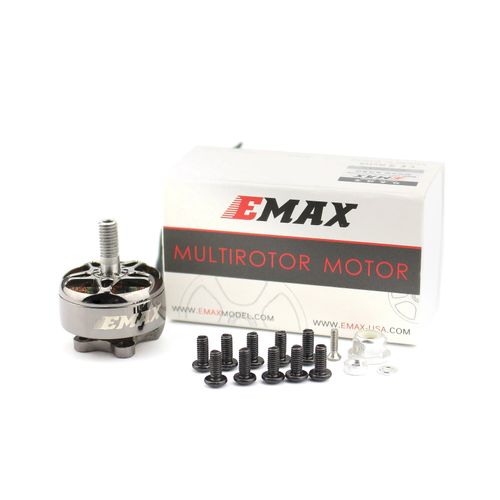
1 × EMAX ECO II 2306 brushless motor in the selected KV version
1 × Aluminum M5 nyloc propeller nut
1 × Shaft washer and retaining screw set
M3 mounting-screw assortment for compatible frame-arm thicknesses
FAQ
What is the EMAX ECO II 2306?
The EMAX ECO II 2306 is a brushless outrunner motor designed for 5-inch and selected 5.5-inch FPV racing, freestyle and cinematic multirotor builds.
Which KV versions are available?
The ECO II 2306 series is available in 1700KV, 1900KV and 2400KV versions. Select the version according to the intended battery voltage, propeller load and required flight characteristics.
Which battery voltage does each version support?
The 1700KV and 1900KV versions support 3–6S LiPo batteries. The 2400KV version supports 3–4S LiPo batteries.
Can the 2400KV motor be used with a 6S battery?
No. The official specification lists the 2400KV version for 3–4S operation. Use the 1700KV or 1900KV version for a compatible 6S configuration.
Which propeller sizes are supported?
The official specification lists 5-inch to 5.5-inch propellers. Actual propeller selection should also consider blade count, pitch, battery voltage, ESC capacity and total aircraft weight.
What mounting pattern does the motor use?
The motor uses a 16 × 16mm mounting pattern with four M3 mounting holes, making it compatible with many standard 5-inch FPV frame arms.
What is the difference between the 1700KV and 1900KV versions?
Both versions support up to 6S. The 1700KV version provides a lower RPM profile that can favor efficiency and controlled throttle response, while the 1900KV version provides a more aggressive RPM profile and higher specified peak output.
What are the specified peak-current values?
The specified peak currents are 36A for the 1700KV version on 6S, 46A for the 1900KV version on 6S and 44A for the 2400KV version on 4S. Actual current depends on the propeller and operating conditions.
Which magnets are used in the ECO II 2306?
The motor uses N52SH arc magnets designed to provide strong magnetic performance, responsive throttle control and increased torque.
Which bearing does the motor use?
The ECO II 2306 uses an EZO 9mm precision bearing for smooth rotation, reduced mechanical resistance and consistent operation.
How should an ESC be selected for this motor?
Select an ESC with sufficient continuous and burst-current capacity for the chosen KV version, battery voltage and propeller. Provide additional current headroom for aggressive propellers and high-throttle operation.
What should be checked during installation?
Confirm the motor screw length, solder-joint quality, motor direction, propeller orientation and free bell rotation. Mounting screws must not contact the motor windings.
B2B Procurement FAQ
Is the ECO II 2306 suitable for wholesale FPV motor procurement?
Yes. Its three KV options, standard mounting pattern and broad 5-inch FPV compatibility make it suitable for retailers, distributors, repair providers and FPV drone integrators.
What should buyers confirm before ordering?
Buyers should confirm the required KV ratio, quantity per KV version, battery voltage, propeller range, package contents, production batch and destination market requirements.
What information should be included in a bulk RFQ?
Include the required quantity, KV distribution, intended aircraft size, battery voltage, propeller configuration, packaging requirements, delivery destination and requested delivery schedule.
Can different KV versions be combined in one order?
Mixed-KV procurement may be requested when preparing a quotation. Availability, minimum quantities and packing arrangements should be confirmed before the order is finalized.
Which quality checks are recommended before shipment?
Recommended checks include KV identification, no-load operation, bearing noise, bell balance, shaft alignment, winding resistance, wire condition, mounting-hole inspection and accessory verification.
Should motor sets be checked for consistency?
Yes. Motors intended for the same aircraft should be sampled for consistent no-load current, vibration, bearing condition and winding resistance before shipment.
Can packaging or labeling be customized?
Packaging, barcode, labeling and documentation customization depend on order quantity and supplier capability. Buyers should provide the required artwork and packaging specifications during quotation.
Which documents should bulk buyers request?
Buyers should request the latest specification sheet, dimensional drawing, KV-version list, test data, packing list, production-batch information and any compliance documents required by the destination market.