

BETAFPV ELRS Lite Receiver Flat Antenna V1.2
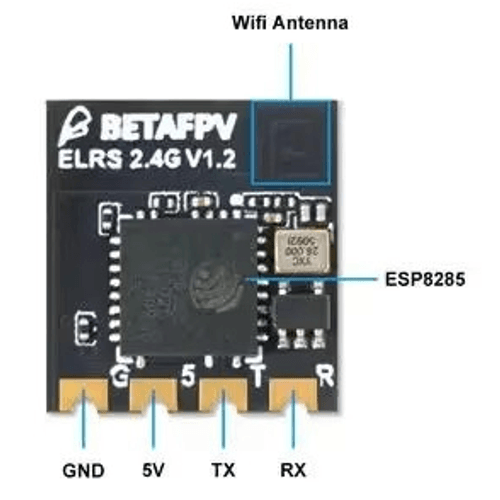
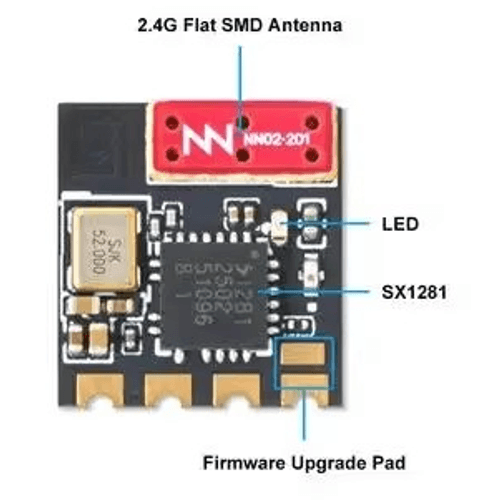
Technical Highlights
Flat Antenna V1.2 Design
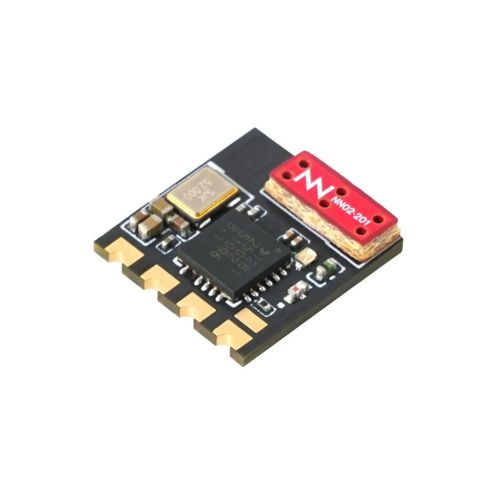
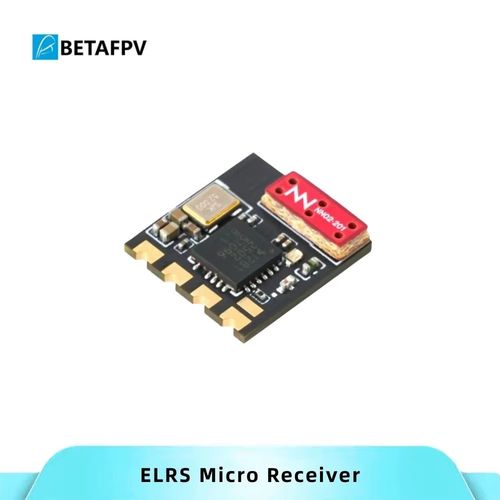
The upgraded V1.2 receiver combines the ExpressLRS receiver circuit and SMD ceramic antenna in an extra-thin 11 × 10 × 3mm package. Its low-profile structure is designed for compact FPV drones where installation space and antenna durability are important.
2.4GHz ExpressLRS Control Link
The receiver operates in the 2.4GHz ISM band and uses the open-source ExpressLRS control system for responsive command transmission, high packet rates and long-range RC applications.
Ultra-Light 0.46g Construction
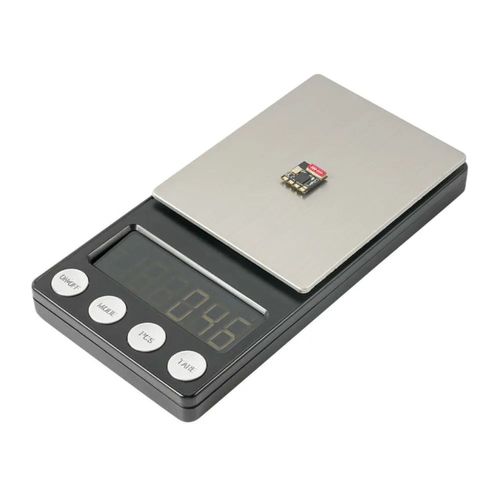
At approximately 0.46g, the receiver adds minimal weight to small racing drones, toothpick platforms and 65–85mm whoop builds.
Integrated Ceramic Antenna
The onboard SMD ceramic antenna eliminates an external antenna cable and U.FL connector, simplifying installation while reducing the risk of antenna separation during crashes.
Optimized Signal Matching
Updated impedance matching improves signal reliability and receiver sensitivity compared with the earlier flat-antenna version. Proper antenna placement remains essential for consistent RF performance.
CRSF Serial Interface
The receiver communicates with compatible flight controllers through the CRSF serial protocol, providing control-channel data, telemetry support and RSSI or link-quality information through a UART.
Enlarged Soldering Pads
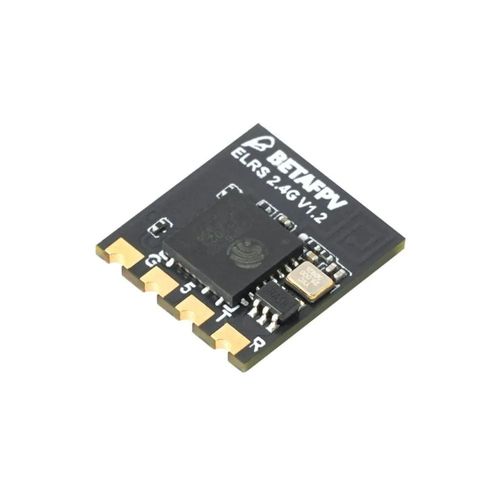
Larger soldering pads make the 5V, ground, TX and RX connections easier to identify and solder during assembly, repair and small-batch drone production.
Range Reference
50mW Transmitter Test
BETAFPV reports a range of up to 1000m for Flat Antenna V1.2 when tested with 50mW transmitter power at a 500Hz packet rate under its specified test conditions.
25mW Transmitter Test
A range of approximately 300m is listed for the manufacturer's 25mW test configuration. Actual range depends on antenna placement, transmitter settings, RF interference, installation materials, aircraft orientation and local regulations.
Installation and Configuration
Supply the receiver with a regulated 5V DC source and verify polarity before applying power.
Connect the receiver TX pad to a flight-controller RX pad and connect the receiver RX pad to the corresponding flight-controller TX pad.
Connect receiver ground to flight-controller ground and use the same UART for the TX and RX connections.
Enable Serial RX for the selected UART and select CRSF as the serial receiver provider in compatible flight-controller software.
Keep the ceramic antenna clear of carbon-fiber plates, batteries, high-current wires, ESCs, VTX units and other RF-shielding components.
Secure the receiver with suitable heat-shrink tubing or non-conductive mounting material without applying pressure to the antenna section.
Remove propellers before binding, firmware updating or testing the receiver and flight-controller configuration.
Compatibility
Compatible with 2.4GHz ExpressLRS transmitter modules and radio systems.
Designed for flight controllers with a free UART and CRSF serial support.
Suitable for FPV drones, racing drones, toothpick builds and whoop drones.
Requires transmitter and receiver firmware from compatible ExpressLRS major versions.
Not compatible with 868MHz or 915MHz ExpressLRS transmitters.
Provides CRSF serial output rather than direct multi-channel PWM outputs.
Recommended Applications
65–85mm whoop drones
Micro FPV racing drones
Toothpick and lightweight freestyle platforms
Space-constrained custom FPV aircraft
Weight-sensitive OEM and small-batch FPV assemblies
Package Contents
1 × BETAFPV ELRS Lite Receiver with Flat Antenna V1.2
2 × Spare heat-shrink tubes
4 × 30AWG silicone connection wires
FAQ
What is the BETAFPV ELRS Lite Receiver Flat Antenna V1.2?
It is an ultra-light 2.4GHz ExpressLRS serial receiver with an integrated flat SMD ceramic antenna, CRSF output and a low-profile 11 × 10 × 3mm design.
What is the difference between Flat Antenna V1.2 and the tower-antenna version?
Flat Antenna V1.2 is approximately 11 × 10 × 3mm and weighs 0.46g. It uses a low-profile ceramic antenna and updated impedance matching. The older tower-antenna version is approximately 10 × 10 × 6mm and uses a raised ceramic antenna structure.
Which frequency does the receiver use?
The receiver operates in the 2.4GHz ISM band and must be used with a compatible 2.4GHz ExpressLRS transmitter.
What input voltage does the receiver require?
The receiver requires a regulated 5V DC supply. Do not connect it directly to a battery voltage that exceeds its specified input.
Which output protocol does the receiver use?
It uses the CRSF serial protocol. Connect the receiver to a compatible flight-controller UART and select CRSF as the serial receiver provider.
How should the TX and RX pads be connected?
Connect the receiver TX pad to the selected flight-controller RX pad. Connect the receiver RX pad to the corresponding flight-controller TX pad, then connect 5V and ground.
Does the receiver provide telemetry?
Yes. The receiver supports ExpressLRS telemetry with a specified telemetry power of 17mW.
What range can the receiver provide?
BETAFPV reports up to 1000m at 50mW transmitter power and a 500Hz packet rate under its test conditions, and approximately 300m at 25mW. Actual range varies with antenna placement, RF interference, transmitter settings, aircraft orientation and local operating conditions.
How is the receiver placed in binding mode?
One supported method is to power-cycle the receiver three times until the status LED enters the specified rapid double-blink binding pattern. A matching binding phrase may also provide automatic binding when both transmitter and receiver are configured correctly.
Must the transmitter and receiver use the same ExpressLRS version?
The transmitter and receiver should use compatible ExpressLRS major versions. Confirm the installed firmware and device target before flashing or binding.
Can this receiver be used with 868MHz or 915MHz transmitters?
No. This version is designed for 2.4GHz ExpressLRS systems and is not frequency-compatible with 868MHz or 915MHz transmitter modules.
Where should the integrated antenna be installed?
Position the ceramic antenna away from carbon fiber, batteries, high-current wiring, ESCs, VTX units and other objects that may shield or interfere with the 2.4GHz signal.
B2B Procurement FAQ
Which product version should buyers specify in an RFQ?
Specify BETAFPV ELRS Lite Receiver, 2.4GHz, Flat Antenna V1.2. This helps distinguish the 11 × 10 × 3mm flat version from the older tower-antenna and earlier flat-antenna versions.
Which specifications should be confirmed before bulk ordering?
Confirm the antenna revision, frequency band, firmware version, device target, dimensions, weight, package contents, manufacturing batch and required order quantity.
What information should be included in a bulk RFQ?
Include the required quantity, destination country, delivery schedule, receiver revision, packaging requirements, labeling requirements and any requested inspection or compliance documents.
What quality checks are recommended before shipment?
Recommended checks include appearance inspection, pad condition, 5V power-up testing, receiver LED operation, binding, CRSF communication, telemetry verification and sample RF range testing.
Should firmware consistency be checked across a production batch?
Yes. Buyers should confirm the installed ExpressLRS version and device target across the batch to reduce binding and integration differences during production.
Can sample units be evaluated before a bulk order?
Sample availability should be confirmed before ordering. Evaluation should cover flight-controller compatibility, wiring, binding, telemetry, antenna placement and range in the intended aircraft structure.
Can packaging or labeling be customized?
Custom packaging, barcode labels, product labels and documentation depend on the requested quantity and production arrangement. Provide the required artwork and labeling specifications with the RFQ.
Which documents should bulk buyers request?
Buyers should request the current specification sheet, wiring diagram, firmware information, packing list, batch details and any compliance documentation required for the destination market.