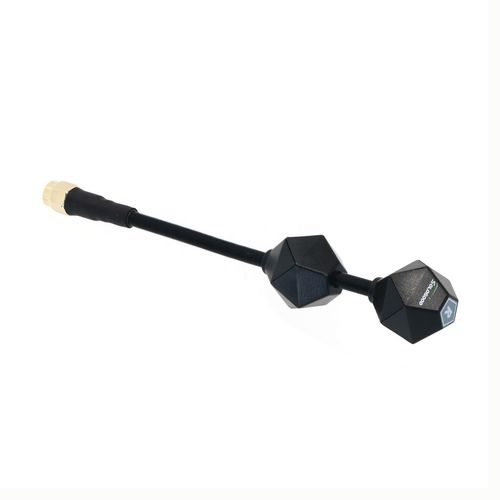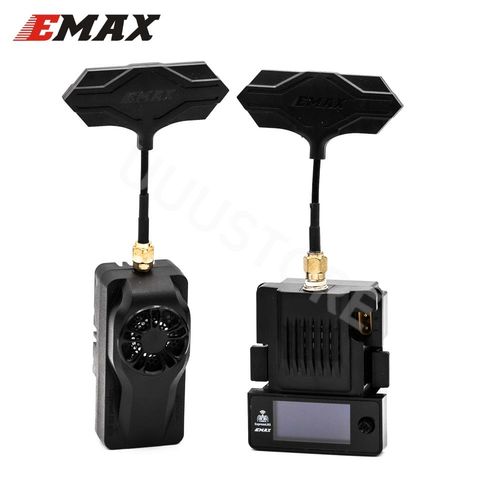
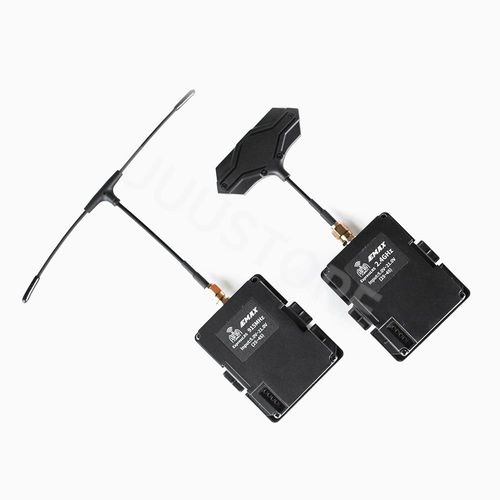
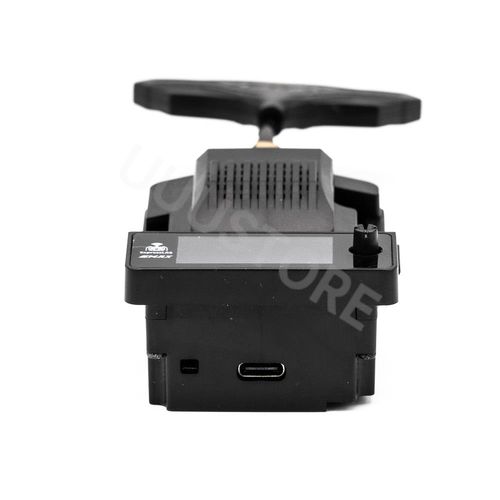
2.4GHz and 915MHz Options
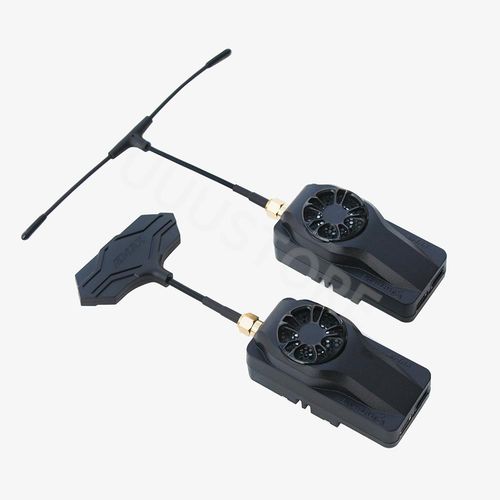
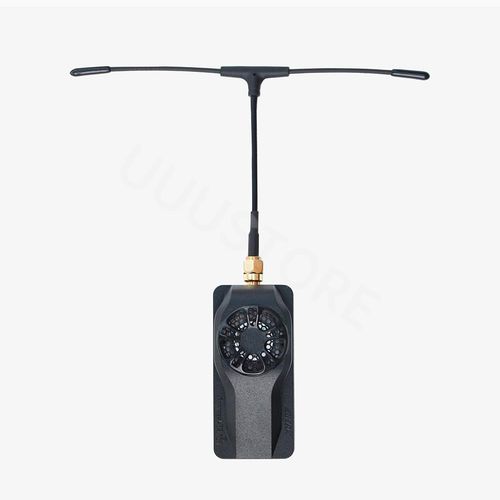
The Aeris Link series is available in 2.4GHz and 915MHz versions, with 868MHz operation available for compatible regional configurations.


The Aeris Link series is available in 2.4GHz and 915MHz versions, with 868MHz operation available for compatible regional configurations.
The 2.4GHz version supports output power up to 1000mW, while the 915MHz version supports output power up to 2000mW for compatible long-range applications.
ExpressLRS firmware and the CRSF serial protocol provide a responsive control link, adjustable packet rates and compatibility with supported OpenTX-based radio controllers.
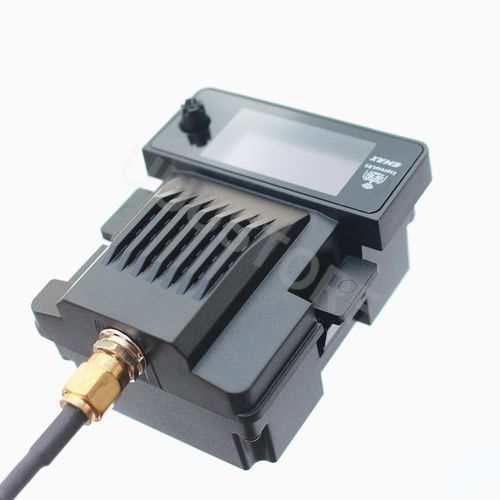
Full-size Aeris Link TX modules fit compatible JR-style module bays, while Aeris Link Micro modules are designed for compatible Nano-style module bays.
An integrated cooling fan and ventilated enclosure help control operating temperature during high-power RF transmission.
Adjustable power, packet rate, telemetry ratio, dynamic power, fan threshold, binding and Wi-Fi functions can be managed through compatible ExpressLRS LUA controls.
| Product Series | EMAX Aeris Link TX / Aeris Link Micro |
|---|---|
| Module Type | External ExpressLRS RF transmitter module |
| Frequency Options | 2.4GHz ISM or 915MHz FCC / 868MHz EU |
| Control Protocol | ExpressLRS with CRSF serial communication |
| Radio Compatibility | Compatible OpenTX-based radio controllers with supported module bays |
| Full-Size Interface | JR-style module bay |
| Micro Interface | Nano-style module bay |
| External Power | XT30 input, 5–21V |
| Recommended Power | 2S battery, approximately 8.4V |
| USB Interface | USB Type-C |
| Cooling | Integrated adjustable cooling fan |
| Configuration | ExpressLRS LUA script and Wi-Fi firmware management |
| Antenna | Frequency-matched T-shaped antenna |
| 2.4GHz Frequency | 2.4GHz ISM band |
|---|---|
| 2.4GHz Maximum Output | 1000mW / 1W |
| 2.4GHz Power Levels | 10 / 25 / 50 / 100 / 250 / 500 / 1000mW |
| 915MHz Frequency | 915MHz FCC / 868MHz EU |
| 915MHz Maximum Output | 2000mW / 2W |
| 915MHz Power Levels | 10 / 25 / 50 / 100 / 250 / 500 / 1000 / 2000mW |
| Default Output Power | 10mW |
| Dynamic Power | Supported through compatible ExpressLRS settings |
| Fan Threshold | Adjustable according to selected RF output power |
| 2.4GHz Packet Rates | 50Hz, 100Hz Full, 150Hz, 250Hz, 333Hz Full, 500Hz, D250Hz, D500Hz, F500Hz and F1000Hz |
|---|---|
| 915MHz Packet Rates | 25Hz, 50Hz, 100Hz, 100Hz Full and 200Hz |
| Telemetry Ratio | Standard, Off, 1:128, 1:64, 1:32, 1:16, 1:8, 1:4, 1:2 and Race |
| Binding | Manual binding mode or compatible ExpressLRS binding phrase |
| Model Match | Supported through compatible ExpressLRS configuration |
| Wi-Fi Management | Firmware updates and supported module configuration |
| Full-Size Version | Aeris Link TX for compatible JR-style module bays |
|---|---|
| Full-Size Dimensions | 72 × 63 × 35mm, excluding antenna |
| Full-Size Weight | Approximately 59g, excluding antenna |
| Full-Size Display | 1.29-inch OLED, 64 × 128 resolution |
| Micro Version | Aeris Link Micro for compatible Nano-style module bays |
| Micro Dimensions | 72 × 32 × 32mm, excluding antenna |
| Micro Weight | Approximately 39g, excluding antenna |
| Micro Configuration | Configuration through the compatible radio controller and ExpressLRS LUA interface |
Long-range FPV airplanes and fixed-wing aircraft
FPV racing and freestyle multirotors
ExpressLRS radio-controller upgrades
RC aircraft requiring adjustable RF output power
Professional and experimental long-range RC platforms
OpenTX and ExpressLRS-based control systems
1 × Selected EMAX Aeris Link TX or Aeris Link Micro Module
1 × Frequency-Matched T-Shaped Antenna
1 × Product Introduction and Manual Website Card
The EMAX Aeris Link is an external ExpressLRS RF transmitter-module series designed to add an ELRS control link to compatible radio controllers.
No. It transmits radio-control and telemetry data between a compatible radio controller and an ExpressLRS receiver. It does not transmit camera video.
The full-size Aeris Link TX fits compatible JR-style module bays and includes an OLED display. The Aeris Link Micro fits compatible Nano-style module bays.
The series is available in 2.4GHz and 915MHz versions, with 868MHz operation used for compatible EU regional configurations.
The 2.4GHz version supports up to 1000mW, while the 915MHz version supports up to 2000mW.
Yes. Multiple output levels are available from 10mW up to the maximum supported by the selected frequency version.
The XT30 external-power input supports 5–21V. A 2S battery at approximately 8.4V is recommended by the product documentation.
Yes. The integrated fan helps manage temperature during high-power operation, and its activation threshold can be adjusted.
The standard transmitter-module package contains the selected module and matching antenna. Aircraft-side ExpressLRS receivers are separate product options unless specifically included by the seller.
Compatible settings can be managed through an ExpressLRS LUA script on the radio controller. Wi-Fi mode is also available for supported firmware management.
No. Install the correct frequency-matched antenna before powering the module to reduce the risk of RF hardware damage.
External power through the XT30 input is recommended during high-output operation to prevent insufficient power from the radio controller.
Buyers should confirm the radio-controller module-bay size, required operating frequency, regional frequency regulations and required maximum RF output before selecting a version.
Confirm the JR or Nano module interface, 2.4GHz or 915MHz frequency, antenna type, firmware version, receiver compatibility, external-power requirements and package contents.
Include the required quantity, selected frequency, module-bay format, destination country, preferred firmware, receiver requirements, packaging needs and requested delivery schedule.
Receivers are normally separate product options unless a specific package states otherwise. Buyers should list the required receiver quantity and antenna version in the RFQ.
Frequency and output-power regulations vary by market. Buyers must confirm whether 915MHz FCC, 868MHz EU or another permitted configuration is required.
Recommended checks include module power-up, fan operation, antenna inspection, frequency and output verification, CRSF communication, binding, telemetry, USB connectivity and external-power testing.
Packaging, labeling, antennas, receiver combinations and documentation may be customized depending on supplier capability, order quantity and regulatory requirements.
Buyers should request the latest specification sheet, firmware information, user manual, packing list, frequency declaration and applicable compliance documents for the destination market.