

JIYI K++ V2 Agricultural UAV Flight Controller
Technical Highlights
Built for Agricultural Multirotors
The K++ V2 supports quadcopter, hexacopter and octocopter configurations with up to eight motor output channels. JIYI specifies PWM ESCs operating below 490 Hz.
Redundant Flight-Control Sensors
The manufacturer specifies dual CPUs, three redundant IMUs and two redundant barometers for the K++ V2 system.
Spraying and Route Functions
Supported workflows include AB operation, autonomous route operation, precision-spraying settings and dual-pump control. Pumps, meters and other spraying hardware must be selected and configured for the aircraft.
Expandable Terrain-Following and Obstacle-Avoidance Functions
The system supports external terrain-following and obstacle-avoidance radar modules. These functions require the appropriate connected modules and setup; they are not built-in sensing features of the controller alone.
System Specifications
| Model | K++ V2 |
|---|---|
| Application | Agricultural multirotor flight control |
| Supported Airframes | Quadcopter, hexacopter and octocopter configurations |
| Maximum Motor Outputs | 8 channels |
| Supported ESC Type | PWM ESCs below 490 Hz |
| Receiver Types | PPM and S-BUS |
| Processor and Sensors | Dual CPU; triple-redundant IMU; dual-redundant barometers |
| System Battery Type | 2–12S LiPo with the appropriate power module |
| Power Dissipation | Less than 5 W, as specified by the manufacturer |
Operations and Expansion
| Flight and Work Modes | Attitude, GPS/manual operation, AB operation and autonomous route operation |
|---|---|
| Spraying Controls | Precision-spraying settings, pump switch control, pump linkage and dual-pump mode |
| Protection and Records | Configurable return, low-voltage protection, fence function and flight-log download |
| Supported External Modules | Terrain-following radar, obstacle-avoidance radar, RTK and other JIYI-listed peripherals, subject to the required hardware and configuration |
| Configuration Software | JIYI K++ V2 Assistant software |
Physical Specifications
| Flight Controller Dimensions | 72.6 × 48.0 × 22.8 mm |
|---|---|
| Flight Controller Weight | 87 g |
| Operating Temperature | −10 to 60 °C |
| Storage Temperature | −25 to 60 °C |
Selection and Installation Notes
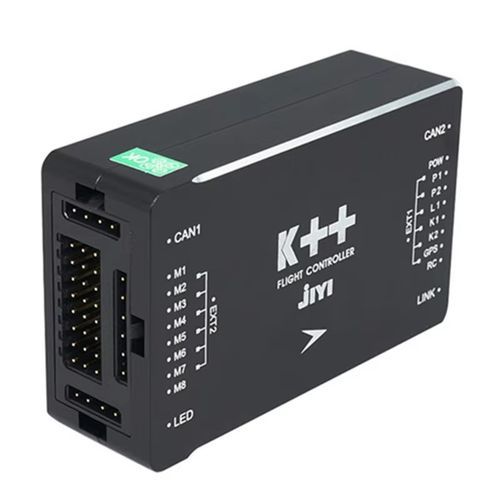
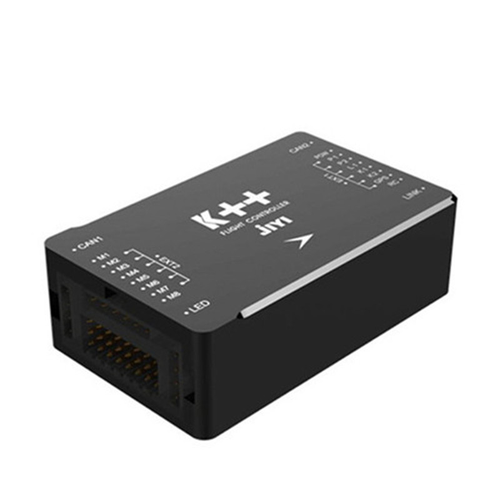
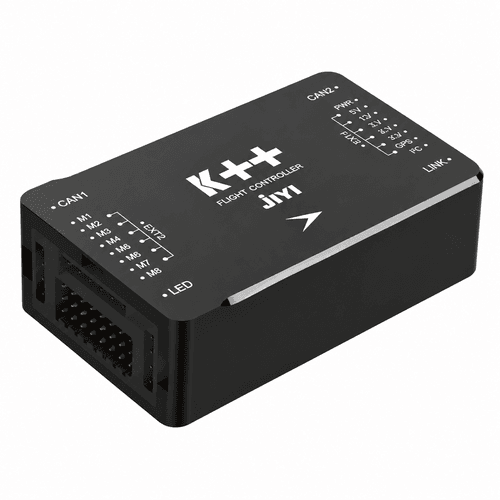
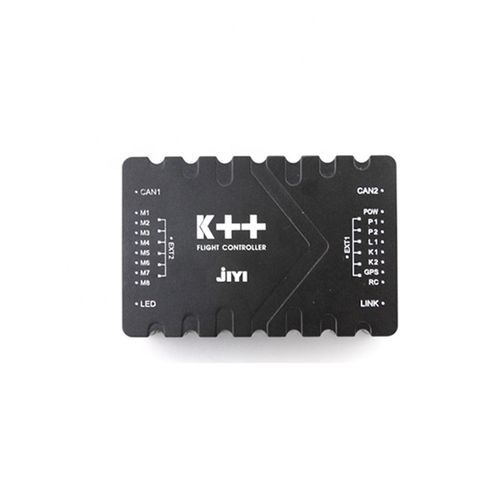
Confirm that the supplied unit is the K++ V2 hardware revision; the photographed housing itself is marked K++.
Terrain following requires a connected terrain-following radar. Obstacle avoidance requires a suitable obstacle-avoidance module.
The 2–12S LiPo figure describes the supported system configuration and should not be treated as permission to connect a battery directly to an unspecified flight-controller port.
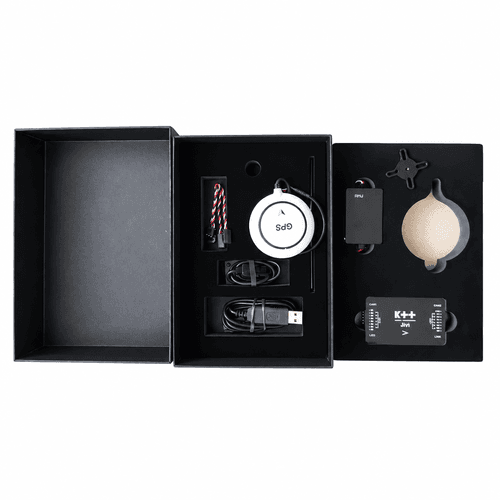
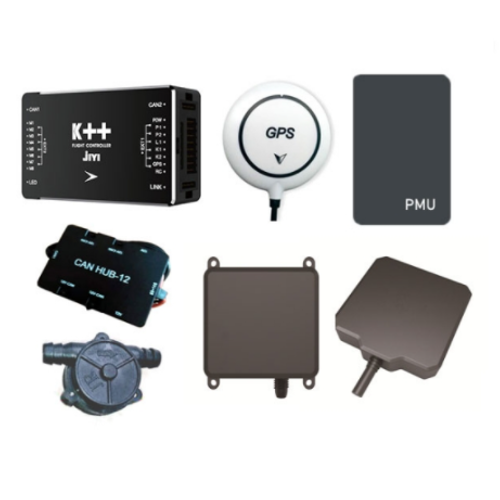
Confirm the actual kit contents, power module, GPS and expansion modules for the selected quotation configuration.
FAQ
Does the K++ V2 have built-in obstacle avoidance and terrain recognition?
No built-in radar is established by the supplied controller photographs. Terrain following and obstacle avoidance require the relevant external radar modules and configuration.
Can the K++ V2 control an octocopter?
Yes. JIYI lists octocopter configurations and up to eight motor output channels for this controller.
What receiver and ESC types are specified?
JIYI lists PPM and S-BUS receiver inputs and PWM ESCs operating below 490 Hz.
Does the 2–12S rating mean the battery connects directly to the controller?
No. The figure is a manufacturer system battery specification. Select and wire the appropriate power module according to JIYI documentation rather than connecting a battery to an unspecified controller port.
B2B Procurement FAQ
What should be specified when requesting a quotation?
Specify the K++ V2 hardware revision, airframe configuration, required quantity, power module, GPS and any radar or spraying-system modules needed for the project.
Are GPS, PMU, radar and other pictured modules included?
The attachment shows several configurations and expansion components, but it does not establish one definitive package list. Confirm the exact included items during quotation.
What are the MOQ, lead time, warranty and certification terms?
These terms are not established by the supplied material and must be confirmed during quotation.
Leave Your Message
Products categories
-
ZMR NX4 EVO Fixed-Wing Gyro Flight Contr
-
ZMR NX4 PRO Fixed-Wing Gyro Flight Contr
-
CUAV X7+ Pro Autopilot Flight Controller
-
RadioLink F722 Betaflight Flight Control
-
SpeedyBee F405 V5 OX32 55A FPV Stack
-
SpeedyBee F405 V4 BLS 60A FPV Stack
-
SoloGood F722 V1.0 60A FPV Stack
-
SIYI N7 H7 Autopilot Flight Controller
-
SpeedyBee F7 Mini 35A BLHeli_S Stack
-
RadioLink CrossFlight V1.0 Flight Contro