

Foxeer ELRS 915/868MHz Receiver
Product Overview
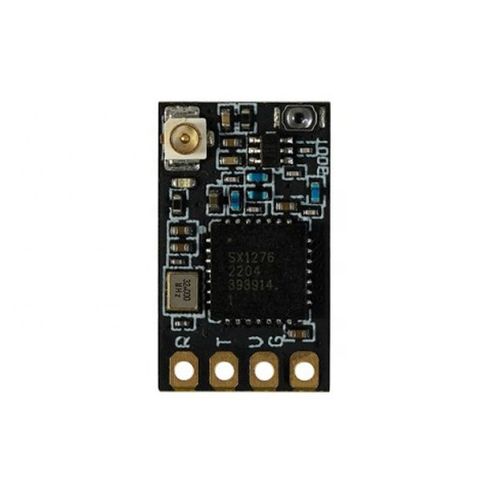
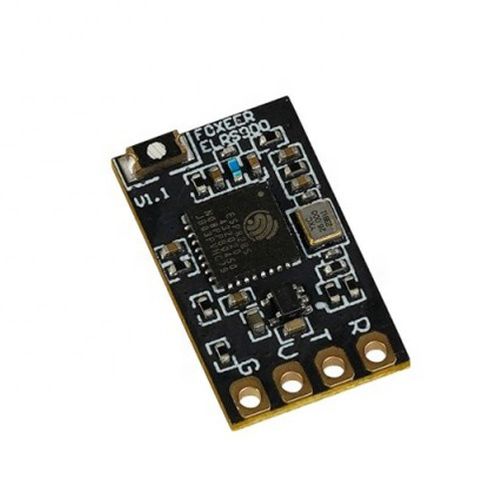
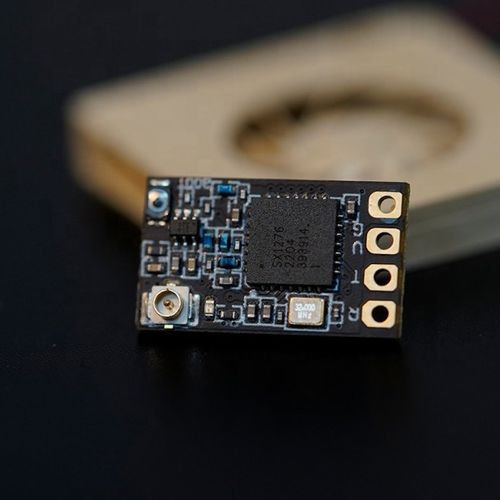
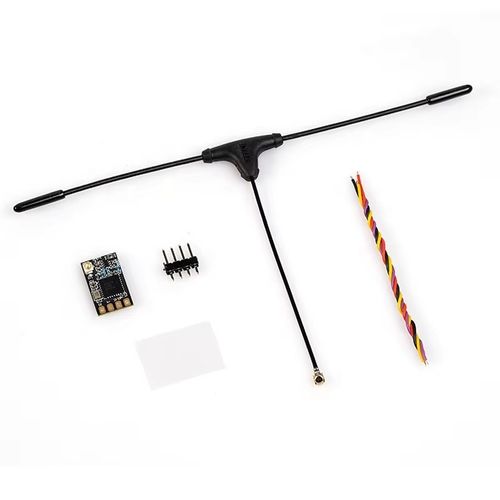
The Foxeer ELRS 915/868MHz Receiver is a compact ExpressLRS radio receiver designed for long-range FPV drones and other space-limited RC aircraft. It combines an ESP8285 processor with the SX1276 RF chipset and communicates with a compatible flight controller through the CRSF interface. Separate 868MHz and 915MHz versions are available for different regional radio systems.
Key Features
Separate 868MHz and 915MHz versions for regional ExpressLRS systems
ESP8285 processor combined with an SX1276 RF chipset
Adjustable 25–200Hz refresh rate
Up to 50mW telemetry RF output
CRSF bus interface for flight-controller communication
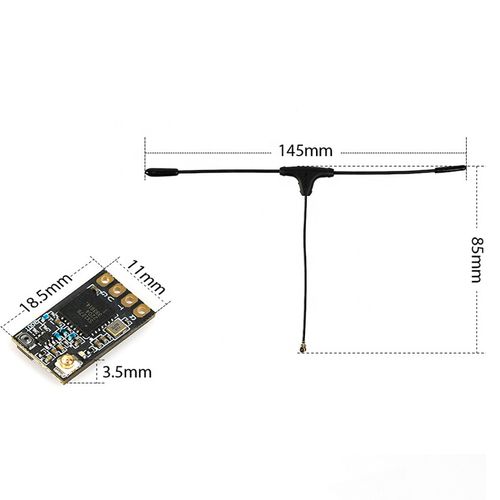
Compact 18.5 × 11 × 3.5mm receiver board
Lightweight 1g receiver weight without the antenna
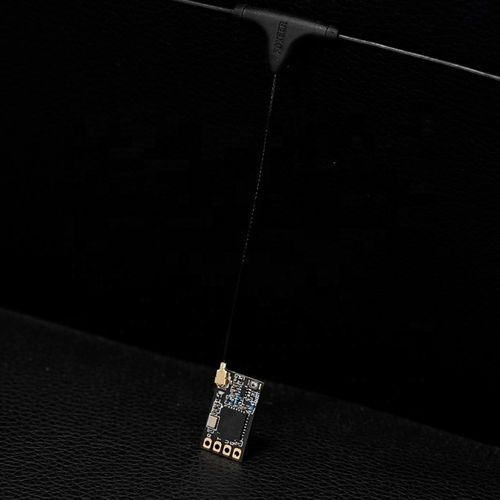
U.FL connector for the supplied external antenna
Blue LED for receiver status indication
Technical Details
ExpressLRS Control Link
The receiver is designed for ExpressLRS radio-control systems and uses the CRSF interface to exchange control and telemetry data with a compatible flight controller.
868MHz and 915MHz Versions
The product is offered as separate 868MHz and 915MHz versions. Buyers should select the version that matches the transmitter module, firmware target and permitted frequency band in the intended operating region.
Configurable Refresh Rate
A supported refresh-rate range of 25–200Hz allows the receiver configuration to be adapted to the required link behavior and the settings supported by the matched ExpressLRS transmitter system.
Compact Installation
Measuring approximately 18.5 × 11 × 3.5mm and weighing 1g without the antenna, the receiver is suitable for compact FPV drone installations where PCB area and payload weight are limited.
External Antenna Connection
The onboard U.FL connector supports the external antenna supplied for the selected frequency version. The antenna should be secured away from carbon-fiber structures, high-current wiring and other RF components.
Specifications
| Product Name | Foxeer ELRS 915/868MHz Receiver |
|---|---|
| Product Type | Nano ExpressLRS Receiver |
| Processor | ESP8285 + SX1276 |
| Frequency Options | 868MHz or 915MHz |
| Refresh Rate | 25–200Hz |
| Telemetry RF Power | 50mW Max |
| Bus Interface | CRSF |
| Input Voltage | 4–5.5V |
| Firmware Version | ExpressLRS V3.2.0 Pre-installed |
| Firmware Target | Foxeer 900 RX |
| Status Indicator | Blue LED |
| Antenna Connector | U.FL |
| Dimensions | 18.5 × 11 × 3.5mm |
| Weight | 1g Without Antenna |
Applications
Long-range FPV multirotors
Compact racing and freestyle drones
FPV fixed-wing aircraft
ExpressLRS-compatible RC aircraft
Lightweight custom UAV builds
Receiver replacement and FPV system integration
Product FAQ
Is this product an FPV video transmitter?
No. It is an ExpressLRS radio-control receiver. It receives control data from a compatible transmitter and sends telemetry data back through the radio link. It does not transmit FPV video.
Does this receiver support 2.4GHz?
No. This product page covers the Foxeer ELRS 868MHz and 915MHz receiver versions. Foxeer 2.4GHz receivers are separate products with different RF hardware and firmware targets.
Can one receiver switch between 868MHz and 915MHz?
The product is supplied as separate 868MHz and 915MHz versions. Select the version that matches the frequency of the ExpressLRS transmitter module and the requirements of the intended operating region.
How does the receiver connect to a flight controller?
It uses the CRSF interface. Connect the receiver power, ground, TX and RX pads to a compatible flight-controller UART according to the wiring diagram and confirm that the UART and receiver protocol are configured correctly.
What input voltage does the receiver require?
The supported input range is 4–5.5V. Use a regulated flight-controller output that remains within this range.
What is the maximum telemetry power?
The maximum telemetry RF power is 50mW. Actual link performance also depends on the selected frequency version, transmitter settings, antenna installation, airframe layout and surrounding RF conditions.
B2B Procurement FAQ
What information should be included in an RFQ?
Please specify the required 868MHz or 915MHz version, target quantity, destination market, required delivery schedule and any documentation or packaging requirements. Availability and commercial terms can then be confirmed for the requested configuration.
How should buyers choose the correct regional version?
Buyers should confirm the permitted radio band in the destination market and verify that the selected receiver frequency matches the ExpressLRS transmitter module. The frequency option should be stated clearly on the purchase order.
Can a sample be evaluated before a volume order?
Sample requirements, current availability and evaluation quantities should be included in the inquiry. The exact sample arrangement can be confirmed according to the requested frequency version and stock status.
What compatibility details should system integrators provide?
Provide the transmitter frequency, ExpressLRS configuration, flight-controller model, available UART, supply voltage and intended aircraft type. These details help identify configuration conflicts before volume integration.
Can mixed 868MHz and 915MHz quantities be quoted?
Submit the quantity required for each frequency version separately. Variant availability, quotation details and order allocation can then be confirmed against the requested purchasing plan.
What should be checked during incoming inspection?
Confirm the frequency version, PCB condition, U.FL connector, antenna condition, supplied wiring and receiver identification. Electrical testing should use a regulated 4–5.5V supply and a compatible ExpressLRS transmitter configuration.
Leave Your Message
Products categories
-
GEPRC ELRS 915M/2.4G C3 Gemini Xrossband
-
SKYDROID 5.8G 150CH UVC OTG FPV Receiver
-
FS2A Mini 4CH AFHDS 2A PWM Receiver
-
TBS Crossfire Nano RX
-
1.2GHz 1500mW Wireless AV Transmitter an
-
Foxeer ELRS 915/868MHz Receiver
-
GEPRC ELRS Nano 915M PA500 Receiver
-
Flysky FGr4 / FGr4S / FGr4P AFHDS 3 Rece
-
CYCLONE ELRS 2400RX-7CH V1.1 Receiver
-
DAKEFPV Ultra1600 / Ultra2500 64CH Analo