

RUSHFPV 4.9G 4W VTX Transmitter Module
Technical Highlights
Eight Channels Across the 4.9G Band
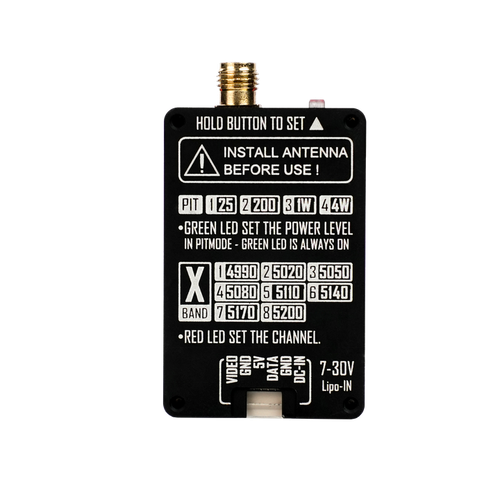
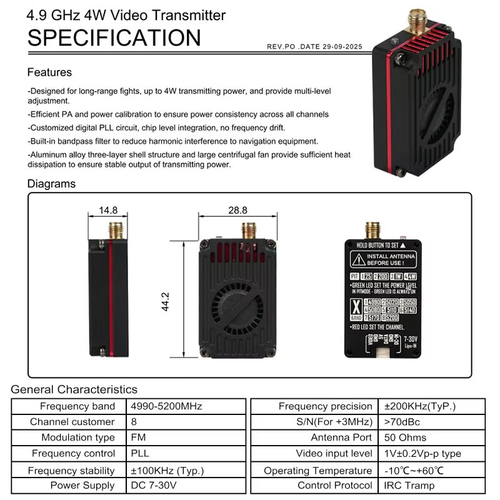
The transmitter provides eight specified channels from 4990 to 5200 MHz for analog FPV video transmission.
Selectable RF Output up to 4 W
PIT, 25 mW, 200 mW and 4 W settings appear consistently in the supplied specification table and device markings. The intermediate setting requires confirmation: the device is marked 1 W, while the table lists 1600 mW.
Button and Flight-Controller Control
A device button with red and green LED indications supports channel and power selection. The DATA connection supports setup through a flight controller using IRC Tramp.
Fan-Assisted Metal Housing
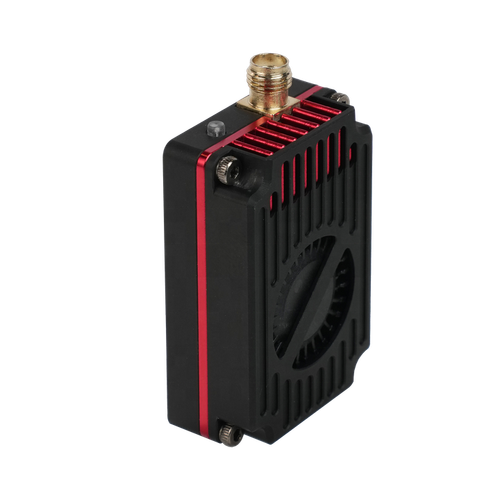
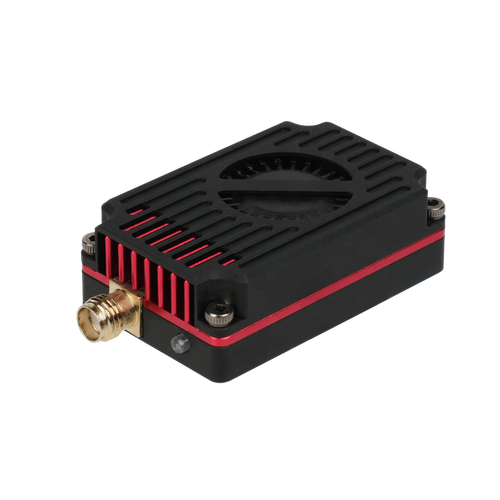
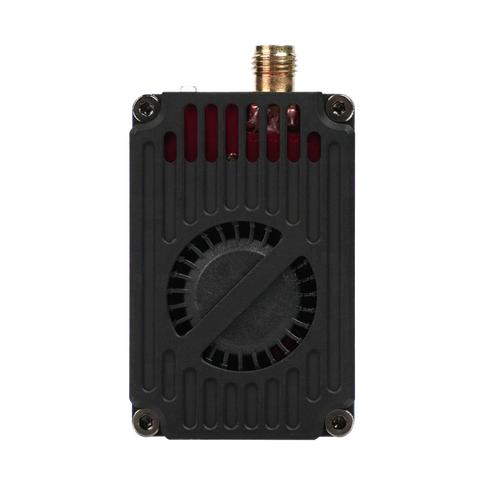
The supplied product material identifies an aluminum-alloy heat-dissipation structure and an integrated centrifugal fan.
RF and Video Specifications
| Frequency Range | 4990–5200 MHz |
|---|---|
| Channel Frequencies | CH1 4990 MHz; CH2 5020 MHz; CH3 5050 MHz; CH4 5080 MHz; CH5 5110 MHz; CH6 5140 MHz; CH7 5170 MHz; CH8 5200 MHz |
| Modulation | FM |
| Confirmed Power Settings | PIT, 25 mW, 200 mW and 4 W. The intermediate setting needs supplier confirmation. |
| RF Port | 50 Ω, SMA |
| Video Input Level | 1 V ± 0.2 Vp-p, typical |
| Frequency Stability | ±100 kHz, typical |
| Frequency Precision | ±200 kHz, typical |
Electrical and Physical Specifications
| Power Supply | DC 7–30 V |
|---|---|
| Control Protocol | IRC Tramp |
| Dimensions | 44.2 × 28.8 × 14.8 mm, per supplied dimension drawing |
| Operating Temperature | −10°C to +60°C |
| Cooling | Integrated centrifugal fan and aluminum-alloy housing |
Pictured Antenna Reference
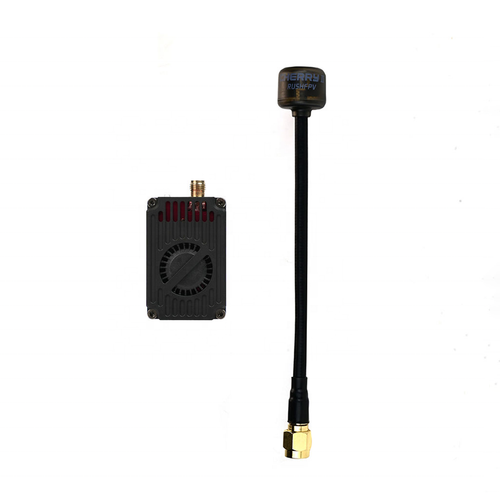
The supplied images show an antenna alongside the transmitter. Its documented specifications are listed below; whether it is included in the sales package must be confirmed when ordering.
| Frequency Range | 4990–5200 MHz |
|---|---|
| Polarization | RHCP |
| Gain | 1.8 dBi |
| Radiation Pattern | Omnidirectional |
| VSWR | <1.5 |
| Cable / Connector | RG402–SMA |
Installation Notes
Connect a suitable antenna before applying power; the supplied wiring guide warns that operation without an antenna may damage the transmitter.
Mount the module securely and maintain ventilation around the fan and housing.
Check that the receiver, antenna and selected channel match the operating frequency. Confirm local requirements before operating a high-power transmitter.
FAQ
Which frequencies does this VTX support?
It has eight specified channels: 4990, 5020, 5050, 5080, 5110, 5140, 5170 and 5200 MHz.
What is the maximum listed output power?
The highest selectable setting is listed as 4 W. PIT, 25 mW and 200 mW are also consistently shown. The intermediate setting is marked 1 W on the device but 1600 mW in the supplied specification table, so its value requires confirmation.
Can the flight controller change VTX settings?
The supplied wiring and settings guide specifies a DATA connection and IRC Tramp control through a flight controller. Settings can also be adjusted using the device button.
What supply voltage does the transmitter require?
The specified power-supply range is DC 7–30 V. Follow the supplied connector pinout when wiring the module.
Can the transmitter be powered without an antenna?
No. The supplied wiring guide instructs users to connect the antenna before use and warns of possible product damage otherwise.
B2B Procurement FAQ
Is the pictured antenna included with every order?
The supplied images and specification sheet show a 4990–5200 MHz RHCP antenna, but they do not provide an explicit packing list. Confirm antenna inclusion and the exact bundle configuration during quotation.
What should be verified before a bulk order?
Confirm the intermediate power setting, antenna inclusion, required quantity, connector configuration and any documentation needed for the destination market before placing an order.
Are MOQ, lead time and certification documents confirmed?
These details are not established by the supplied product material and must be confirmed during quotation.
Leave Your Message
Products categories
-
RUSHFPV 4.9G 4W VTX Transmitter Module
-
RUSHFPV 4.8G-6.1G XSPAN 4W VTX Transmitt
-
RUSHFPV Tiny Tank 5.8GHz VTX
-
RUSHFPV 3.3G 4W VTX Transmitter Module
-
SkyGuy Nano / Max 2.4GHz ExpressLRS Rece
-
RadioMaster ER8G 2.4GHz ELRS PWM Receive
-
RadioMaster ER6 2.4GHz ELRS PWM Receiver
-
RadioMaster ER4 2.4GHz ExpressLRS PWM Re
-
RadioMaster DBR4 Gemini Xrossband Expres
-
RadioMaster Bandit BR3 ExpressLRS Receiv